Grow in Haus
In-House Train the Trainer: Strengthening Learning Culture from Within
When it is structured well, in-house training stops being a system that simply passes on information. It becomes a strategic structure that grows the learning culture from within, makes internal expertise visible and makes development more sustainable. Seen this way, in-house training is more than a practice that supports training activity. It is an important development area that strengthens an organisation’s learning capacity, protects continuity of knowledge and brings development closer to the way work gets done every day.
Learning is no longer a supporting topic that sits only on the agenda of development departments. It is now directly linked to an organisation’s agility, adaptability and sustainability.
The World Economic Forum’s Future of Jobs Report 2025 shows that employers expect around 39% of the core skills required in jobs to change by 2030. The same report shows that a significant share of employees will need reskilling or upskilling. This tells us that learning should no longer be a periodic support function. It needs to be one of the core building blocks of organisational agility and sustainability.
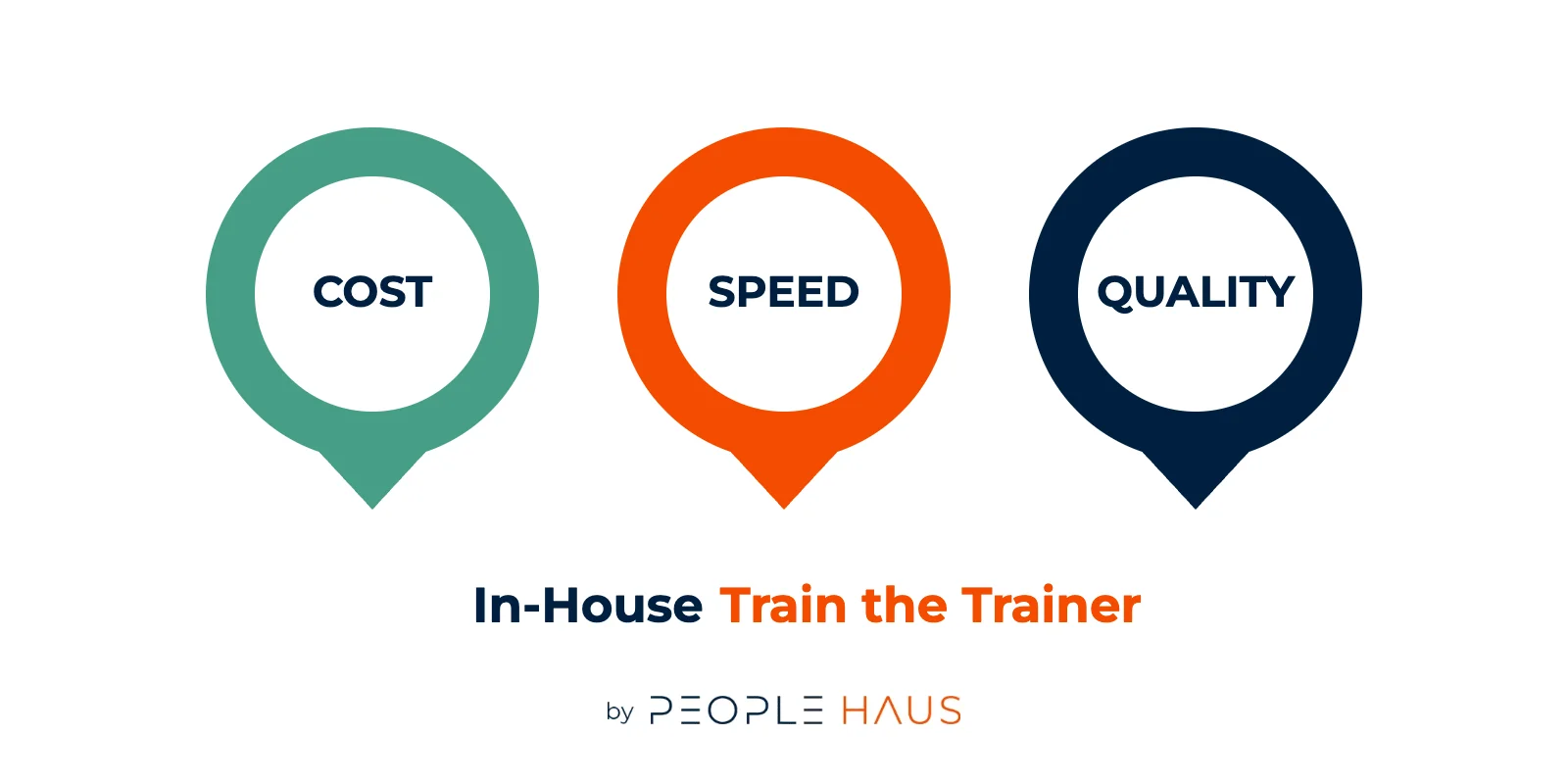
What does in-house train the trainer aim to do?
In-house train the trainer is a strategic learning investment. It stops critical knowledge from depending on individuals alone and turns it into learning processes that are more sustainable, transferable and repeatable. This approach makes employees’ knowledge and experience shareable with wider teams, and helps the organisation strengthen its balance of speed, cost and quality in a more structural way. It also makes the culture of learning from one another more systematic and more visible.
But the value of this structure goes beyond increasing training capacity. In-house training makes learning from one another visible and systematic. Learning stops being support that only comes from outside and becomes a living structure, fed by the organisation’s own internal resources.
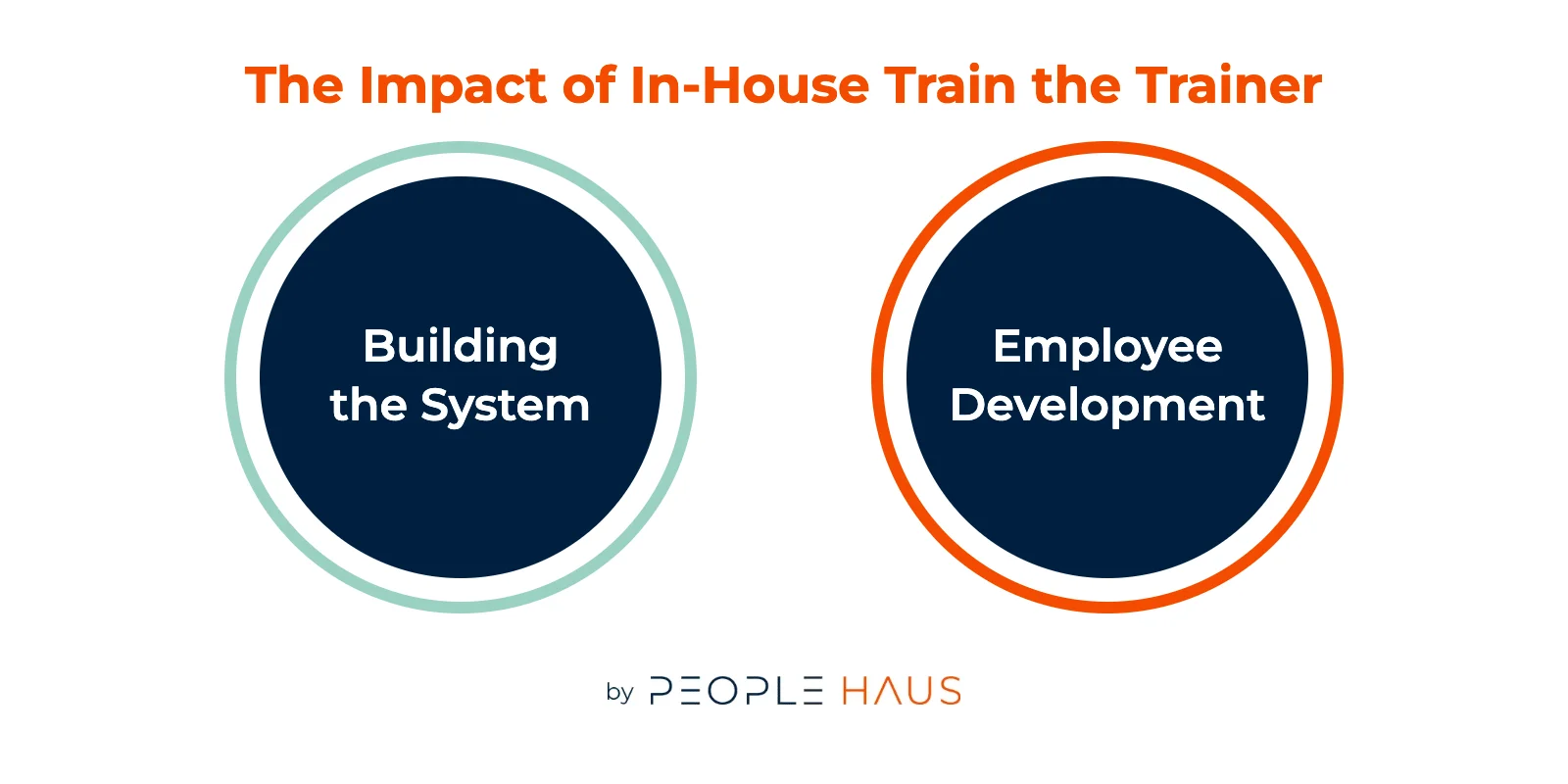
Moving knowledge from people to systems
Organisations hold a great deal of field knowledge, operational intuition and contextual expertise. The people who know the processes best, who experience customer touchpoints and who see the critical nuances of the daily flow are usually the organisation’s own employees. Yet when this knowledge is not structured, it tends to stay dependent on individuals. That creates risks such as loss of knowledge, weaker standards and learning that never gains continuity.
This is exactly where in-house training comes in. It offers the chance to turn the experience already inside the organisation into institutional memory, a shared language and a development system. Knowledge then stops being the expertise of a few people and becomes a learning resource that supports teams, can be reproduced and can spread across the organisation.
How it supports employee development
Developing in-house trainers supports not only the organisation’s learning capacity but also employees’ own development journeys. When employees can pass on what they know, facilitate learning and take on a role that contributes to development, their communication, facilitation, visibility, ownership and influence all grow stronger.
In this way, in-house training helps people move beyond simply doing their own jobs and become professionals who share knowledge, support development and play a more active part in learning. The structure both multiplies the organisation’s internal knowledge and opens a new space for employees’ professional growth.
The effect of external expertise
There is a balance to get right here. A strong learning structure is not built from the inside alone. External training, consultancy and development projects bring new perspectives, up-to-date knowledge, different methodologies and insights from other sectors. On topics such as leadership, culture change, new-generation skills, employee experience and organisational development in particular, external expertise offers a mirroring and framing power that an organisation cannot always easily produce for itself.
Blind spots that are invisible from the inside often become clearer with outside expertise. So the question is not “Which is the right model, in-house training or external training?”
The real strength: internal and external structures working together
External expertise often opens a new door, bringing new concepts, current approaches and different examples of practice. In-house training connects that knowledge with the organisation’s own reality, language and culture. In other words, learning from outside can set a direction, but it takes strong internal structures for that learning to reach the field, settle into the daily workflow and become part of the culture. At this point, in-house training is the critical bridge that lets learning live, be applied and spread within the organisation.
Organisations with a strong learning culture do more than deliver training. They treat learning together with career development, internal mobility, leadership development, organisational resilience and cultural sustainability. Learning is no longer a training topic on its own. It is a strategic area at the centre of talent management, engagement, adaptation and organisational transformation.
Put differently, developing in-house trainers matters not only for meeting today’s training needs but also for building tomorrow’s learning capacity. The faster organisations can respond to changing needs, the stronger they remain. From this angle, in-house training is more than a training model. It is an organisational investment that strengthens flexibility, continuity of knowledge and developmental agility.
In short, the most effective model is neither fed only from outside nor grown only from within. The real strength lies in combining the freshness of external expertise with the context of internal knowledge. That is why developing in-house trainers should be seen not just as a training investment, but as a powerful development area that makes learning an organisation-owned, sustainable and strategic capability.
This is why, at People Haus, we do not treat in-house training as a topic that is only about passing on knowledge. We approach it as a learning journey that strengthens the learning culture from within, makes expertise visible and makes development more sustainable.
Our In-House Train the Trainer programme with SARDUNYA showed how this approach works in practice. Together we explored how internal expertise can become more visible, how knowledge can be shared more systematically and how learning can become a stronger structure within the organisation.
If you want to turn knowledge and experience in your organisation into a more systematic, shareable and sustainable learning structure, we can design your in-house training journey together. 🧡
Warmly,