Grow in Haus
The Hidden Partner in Our Decisions: Unconscious Bias
Does being able to explain the reasoning behind a decision mean we are aware of everything that influenced it?
We usually base our assessments of people and events on our experience and observations. But the same information may not catch everyone’s attention in the same way. A detail can change our view of one person yet escape our notice with another. And the moment this difference forms is not always easy to catch.
Unconscious bias can be at work in exactly those moments when our decisions seem perfectly reasonable to us. The associations and learned expectations we carry from the past shape how we interpret what we see. Over time, these interpretations can show up in how we approach people, who we listen to and who we make room for.
So how does a first interpretation become a decision?
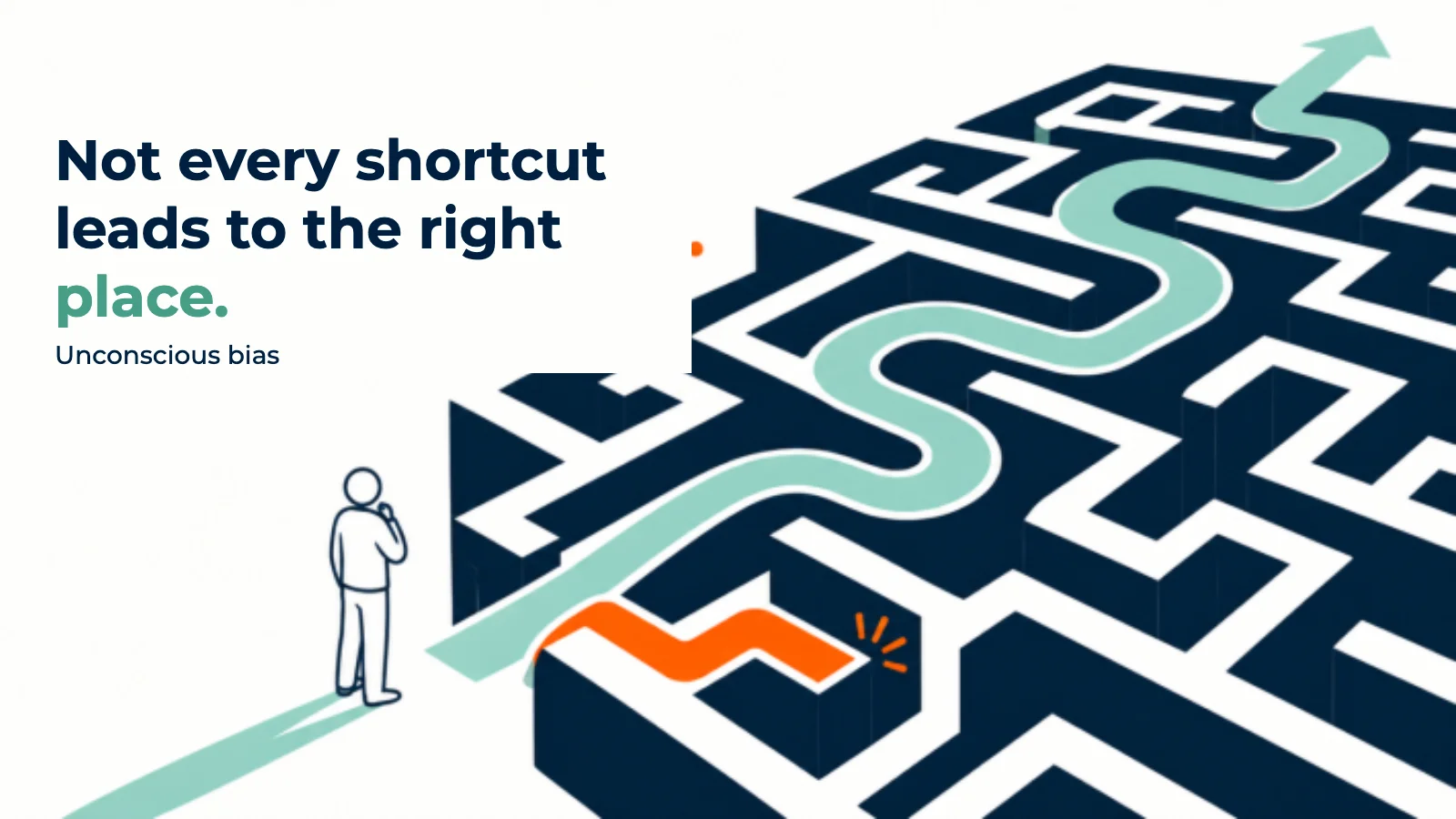
Our minds do not assess every piece of information from scratch. They draw on familiar patterns and associations to produce quick interpretations. In a sense, we make decisions through shortcuts. But shortcuts can sometimes end in dead ends or wrong turns: unconscious, automatic and biased decisions.
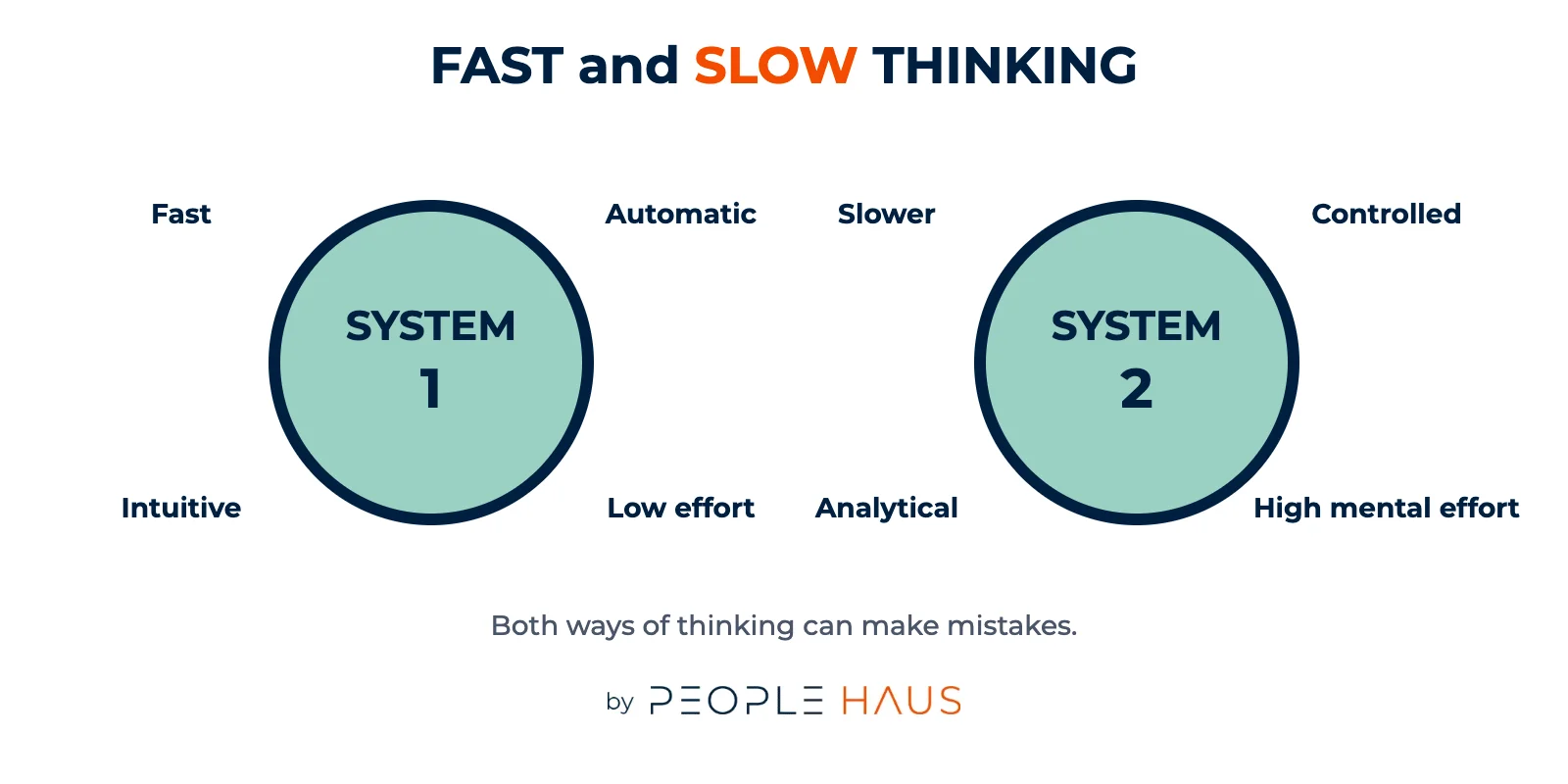
Daniel Kahneman describes this process through two systems: System 1 and System 2.
Think of System 1 as the mind shifting into idle, moving quickly and spending less effort. Most of the time it actually makes things easier. But to think more logically and analytically, and to question our assumptions, we also need to engage System 2.
The first impression we form of someone can settle into the way we read everything that follows. We notice details that fit our expectation more easily, and we may not dwell enough on information that could challenge it. When explaining a decision, we need to think about what we left out of the assessment as well as the reasons we list.
When familiarity enters our assessment
How familiar someone feels can also influence our first impressions. Sometimes a person’s way of thinking, language or background feels close to our own. This closeness can help us connect with them more easily, but it can also interfere with how we assess them.
Social Identity Theory explains the role that the groups we belong to play in how we assess ourselves and others. At work, it is not always easy to separate this sense of belonging and closeness from competence. Finding someone’s approach easier to understand can lead us to value their contribution more highly, while we may make less effort to understand a way of expressing things that feels unfamiliar.
From behaviour to judgements about personality
How close we feel to someone can also affect how we interpret their behaviour. We might explain a harsh reaction from someone we know well with “They’re having a tough day”, yet see the same reaction from someone else and say “They’re difficult to get along with.” In one case we point to circumstances, in the other to personality.
The Fundamental Attribution Error is about how we explain behaviour. When explaining others’ actions, we tend to give too much weight to personal traits and overlook the influence of their circumstances. Before reaching a conclusion about someone, it is important to consider their situation and their own explanation.
Our interpretations can also affect how we treat that person. We may consult someone less if we think they will not contribute, or withhold responsibility from someone we think is not ready. In doing so, we limit both their chance to grow and our chance to know them better.
Opening a space for thinking inside the decision
If our interpretations can reach as far as the opportunities we offer people, what we do with our first reaction becomes important. A feeling, assumption or reaction can arise before we have consciously thought at all. But when we notice this first reaction and pause, we can slow our thinking down.
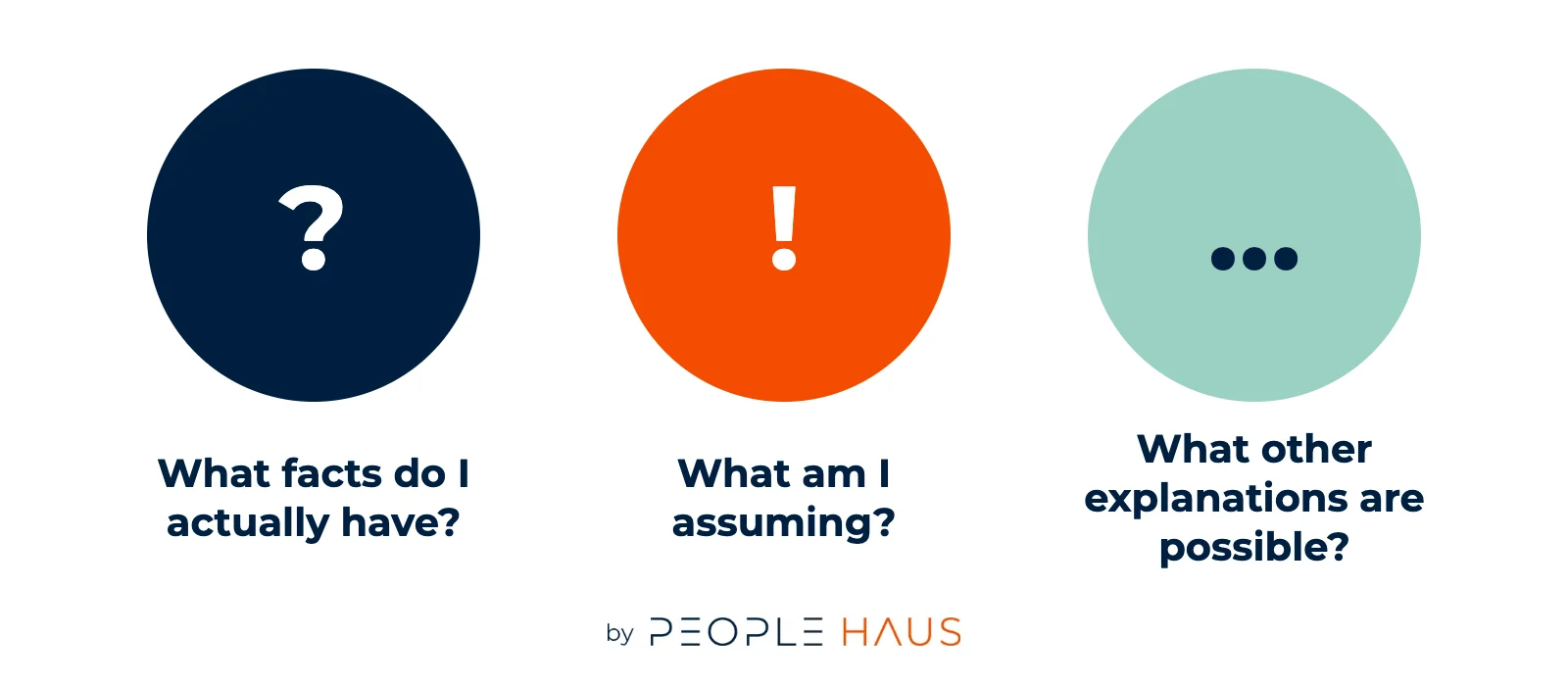
Asking Socratic questions that prompt logical thinking helps activate what Kahneman calls System 2, a more controlled and analytical way of thinking. The aim is not to eliminate the first automatic reaction altogether. It is to place a conscious space for evaluation between the automatic reaction and the behaviour, so that we can choose how to respond.
Being able to discuss these questions within a team opens space for examining the reasoning behind decisions together. Setting assessment criteria in advance and hearing different views can also support this thinking process.
At People Haus, we recently focused on these thinking processes in our JEDI Master and Inclusive and Coaching Leadership training with MAN Türkiye A.Ş. Examining everyday decisions together and trying different approaches can offer a starting point for carrying awareness into practice.
How a manager assesses an employee can, over time, affect the tasks they give that person, the feedback they offer after mistakes and how much room they make for their development. That is why being able to question one’s own interpretations is an important part of manager development.
The scope of responsibility grows especially for someone who becomes a manager for the first time. It is no longer just about doing your own job well, but also about seeing other people’s contributions and supporting their development.
Warmly,
Sources and further reading
- Gilbert, D. T., & Malone, P. S. (1995). The correspondence bias. Psychological Bulletin, 117(1), 21–38.
- Kahneman, D. (2011). Thinking, fast and slow. Farrar, Straus and Giroux.
- Spielman, R. M., Jenkins, W. J., & Lovett, M. D. (2020). Psychology 2e.